Pathways to Community Safety: The intersection of urban planning and transformative justice

Community Safety Pathways was a pedagogical research project that evaluated co-learning and knowledge mobilization practices about community safety by convening urban planners and transformative justice/abolitionist practitioners from across Canada. The project was co-led by Professor Aditi Mehta, Sheryl-Ann Simpson (Associate Professor, Carleton University), and Rachel Fayter (Post-Doctoral Associate, Carleton University).
What processes enable people with varied lived experiences and worldviews to co-learn and exchange knowledge about non-carceral community safety?
Specifically, what factors help or hinder equitable participation among participants at the convening?
How do participants co-create non-carceral solutions?
The research team collected data to answer these questions at the SSHRC Connections Community Safety Pathways convening held in Ottawa on February 14-15, 2026. The convening aimed to build shared understandings of abolition and pathways to increased community safety without increasing the number of imprisoned people, expanding policing, or using carceral solutions such as enclosure, violence or surveillance.
Often, practicing planners do not have the skills and knowledge needed to appropriately support communities with the greatest safety needs. Simultaneously, while abolition/transformative justice practitioners have the skills and knowledge required to support these communities, they are not familiar with the practices of planning that could bring necessary resources into disinvested and over-policed neighbourhoods. The goal of this project was to facilitate mutual learning and political education across both fields, changing the way planners and abolition / transformative justice practitioners envision their roles in pathways to community safety.
Bringing together planners and transformative justice/abolitionist practitioners is both unique and challenging. In Canada, planning has been implicated in harmful policies such as discriminatory zoning, restrictive racial covenants, forced displacement, and carding that sought to surveil, segregate, and control the movement/settlement of minority and Indigenous populations in cities and towns. Planning as a practice contains an inherent tension, being “simultaneously rooted in concerns for social equity and social control” (Thomas 2016, 3). When focused on control, planning can exclude already marginalized populations and maintain unjust spatial orders that support pathways to criminalization (Dikeç 2007; Allspach 2010; Moran and Schliehe 2015; Gill et al 2018; Simpson, Steil and Mehta 2020). Furthermore, economic and social exclusion push marginalized people toward illegal survival activities – for example: homelessness in Canadian cities reveals how planning failures – inadequate affordable housing supply and exclusionary zoning – create conditions where unhoused individuals are criminalized for occupying public spaces.
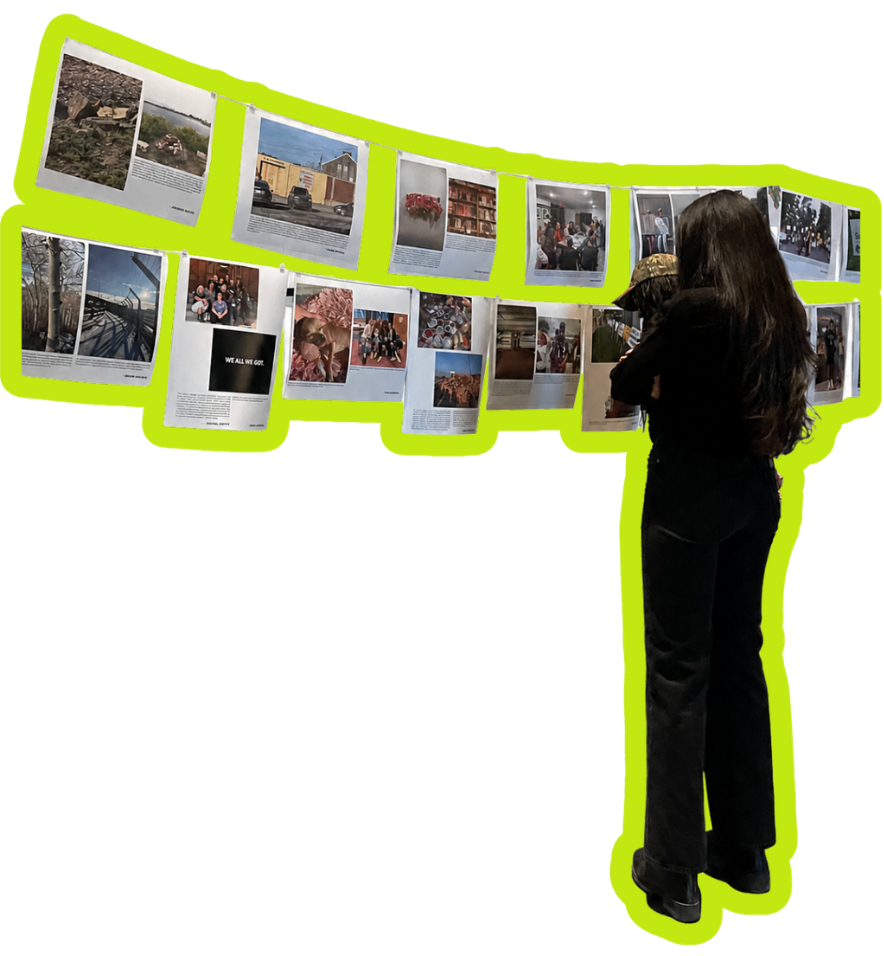
As part of the knowledge exchange, the project curated a photo exhibition, crowd-sourced among the convening participants, by asking: What do you see as a pathway to community safety in your city? What obstacles lie in these pathways? A podcast series is also forthcoming from mixed groups of planners and transformative justice/abolitionist practitioners.
Further reading:
Sheryl-Ann Simpson, Justin Steil, and Aditi Mehta, “Planning beyond Mass Incarceration,” Journal of Planning Education and Research 40, no. 2 (2020): 130–138.
Justin Steil and Aditi Mehta, “When Prison Is the Classroom: Collaborative Learning about Urban Inequality,” Journal of Planning Education and Research 00 (2017).
Planning for Abolition: Fully resourced communities produced through ecosystems of care.